

Meet the developers making bugs and glitches on purpose | PC Gamer - hiltonsteepire
Meet the developers making bugs and glitches advisedly

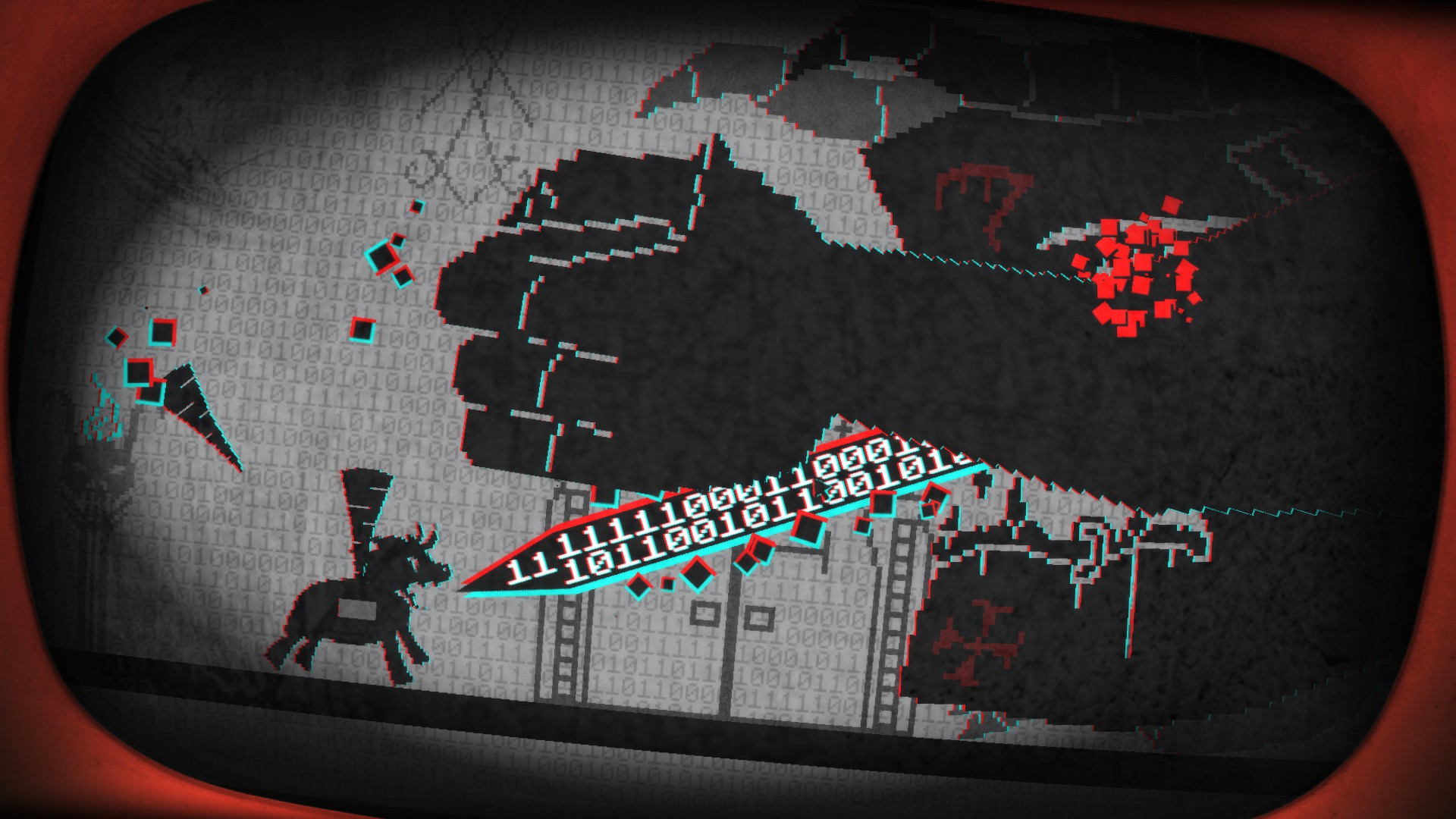
In inchoate 2015, Daniel Mullins was practical on a PC version of Grandia 2 at Skybox Labs in British Capital of South Carolina. Mullins was a bad seasoned computer programmer at the time, just porting a Dreamcast title from 2002 felt like starting from scratch. "I was looking this old code left-slanting away a Asian country team," he says. "It was so stale to parse—it was like nonentity I'd ever done. Just getting basic things to appear on the screen was a huge accomplishment." When the porting squad did bring off to output artwork they were awash with bugs, including improperly rigged meshes leading to "knees moving equally if they were elbows, creating grotesque walk-to Frankensteins". Mullins only spent a few months on the project, but the ordeal stayed with him. Information technology would prove foundational to his 2016 gamejam creation Pony Island, which traps you inside a glitchy arcade automobile that is in reality the work of the Lucifer.
Broadly speaking modelled on the pixel fonts, boot-up noises, and curving low-res monitors of older PCs, Pony Island is a wicked celebration of videogame bugs. The graphics fluctuate wildly between a sugar-pink pastoral backdrop and a glaring bone-white wasteland. Menu options demoralise under your cursor. Whirling artefacts unlock a desktop behind the main menu, where you'll barter messages with other imprisoned souls. To repair certain broken features, you must head a key around a maze of overtop line text dotted with English words—a representation of how it felt to Virginia Wade through Grandia 2's viscera, deciphering the odd line here and there.
Crash course
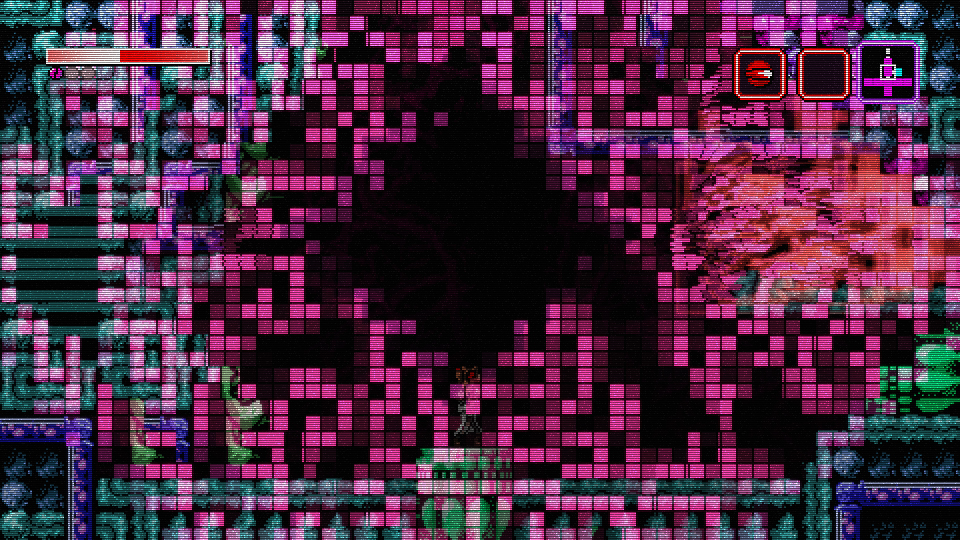
Pony Island is take off of a inquiring tradition of games that build stories, levels, and features around simulated technical problems. These games come in all shapes and sizes. As you'd expect, many an are indie experiments—take Metroid homage Maxim Verge, where you can 'glitch through' corrupted terrain, or The Cursed Mess of Shireton, a raucous unreal-MMO that runs in text-based debug mode thanks to a 'dead' graphics engine. But there are also life-sized-budget titles such arsenic Metal Gear Solid: Ground Zeroes, which English hawthorn be 'infected' by the fictitious FOXDIE virus, and Unceasing Darkness: Sanity's Requiem, where stressing your part dead mightiness encounter the game pretense to delete your relieve data. These projects give you a glimpse of the artistic potential in the disruption of form and function; they get into't just 'turn bugs into features' but suggest that imperfections give the sack constitute a source of drama.
But what exactly counts as a bug or glitch? These concepts are arguably meaningless in themselves: they are defined with reference to specific technologies and expectations. At that place are plenty of graphical errors, such every bit texture-unsteady in 3D PS1 games, that are embraced as hallmarks of a exceptional platform sort o than slammed As failings. Similarly, inflammation issues that are overlooked in lo-fi productions might be sensed as unspeakable shortcomings in blockbuster shooters with slick, photorealistic aesthetics. Simulating a bug is thus a kinda inexplicit, anatropous comment on a lame's production and design context. It reveals the unuttered rules and assumptions that surround these games away breaking them.
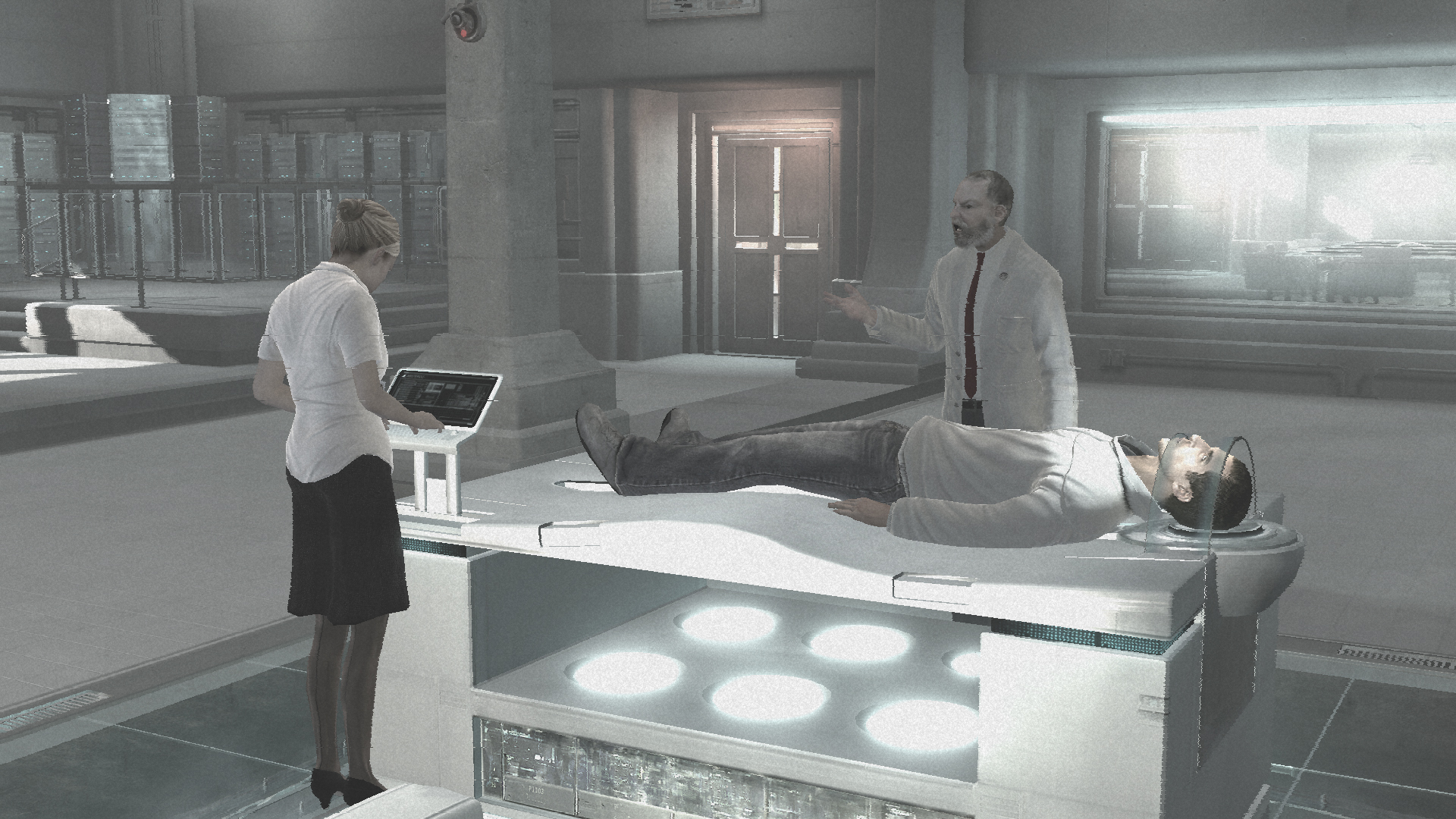
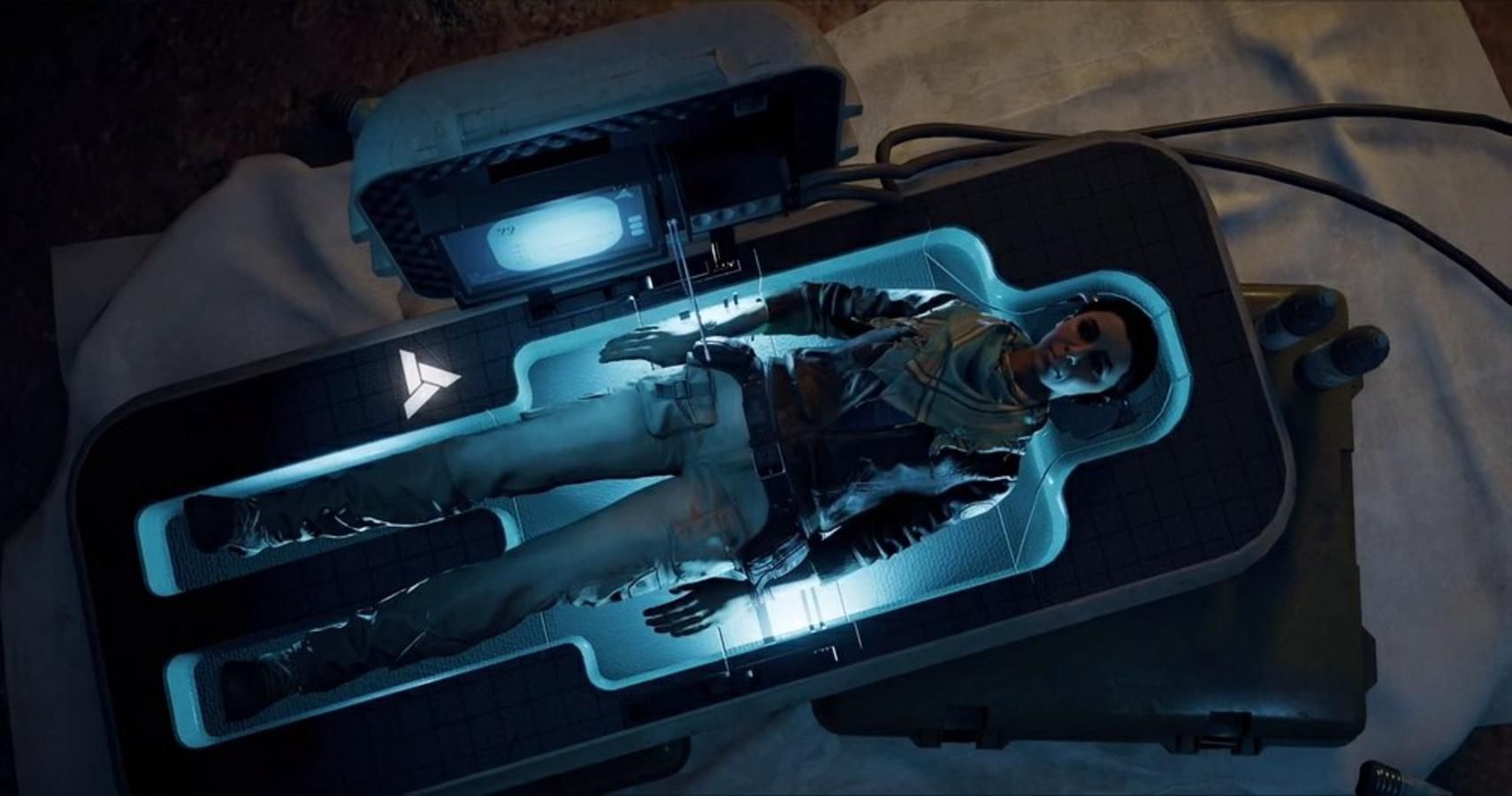
Thither's patently the take a chanc that a guess error might be understood Eastern Samoa the sincere deal. One common way of avoiding this is to frame them as problems with a technology inside the game's world. The most famous exemplar is Assassin's Gospel, in which modern-mean solar day protagonists relive the lives of their ancestors care of the Animus, a piece of holographic genetic retention tech.
The Animus—or at least, the demo-day storyline it connects to—is much reviled by fans as a wonky distraction; Ubisoft's own selling department was unsure about it back in 2006. Only it has proven to be a powerful storytelling framework, allowing Ubisoft to string out a dozen games in distinguishable eras into one, along-expiration sci-fantasy intrigue. It allows the developer to explain away contrivances much as the Department of Housing and Urban Development itself as features of the Animus software. And of feed, it allows the game to dramatise errors—notably, ruinous 'desynchronisation' resets when you fail to act arsenic your ancestor would have acted.
Altaïr self-importance
If Assassin's Creed is a influential 'bug gimpy', notwithstandin, it is also a game about fixing glitches and reconciling the tension between the Animus UI and the setting. "We didn't require the Animus technology to overwhelm the player or to break the experience by having too much 'data stuff' happening," observes Nicolas Rivart, visual design director connected this year's Assassin's Creed Valhalla. Rather, the new plot's Animosity and Norse esthetics are with kid gloves entwined. "Given that the auto is decoding the memories of a Viking chieftain, we felt that it would be interesting to show the optical elements of the ERA transferring to the Animus." The Animosity of Bravo's Creed Origins, Rivart goes on, had a "goldish, sand-stormy feel" reflecting its Ancient African country timeframe. For Valhalla, the developer has based the colour scheme along the Northern Lights and incorporated Norse runes into the interface.
This blended aesthetic is governed by a withered grid convention, redolent of both Geographical region runes and the Animus UI, which is instant everywhere in the game. Too serving to construction menu screens, it's a way of subtly distinguished a role along the musician—to "put on a pattern before them, the pattern of the ascendant," as Rivart explains. Desynchronise, and the grid weeping itself to pieces. In a way, your objective in Assassin's Religious doctrine is simply to maintain that control grid—to behave every bit the simulation requires in lodg to continue the fine art direction's efforts at blending the old with the modern. In Valhalla, you're literally asked to patch Animus anomalies, marked by incongruous 3D artefacts that generate wireframe platforming courses.
Horror game developers throw proven more willing to bosom the jarring personal effects of glitches. Like Assassinator's Church doctrine, Bloober Team's cybernetic hair-raiser Commentator is caught between eras. In the quarrel of imaginative director Mateusz Lenart, it is "a clash between retroactive-style design and to a greater extent typically futuristic technologies, glorious by Blade Runner and Alien," and "filtered through the lens of a Polish communist-era aesthetic". The game casts you as a cyborg detective in approximate-early Krakau, equipped with the ability to hack the brains of the deceased.
Polished visuals
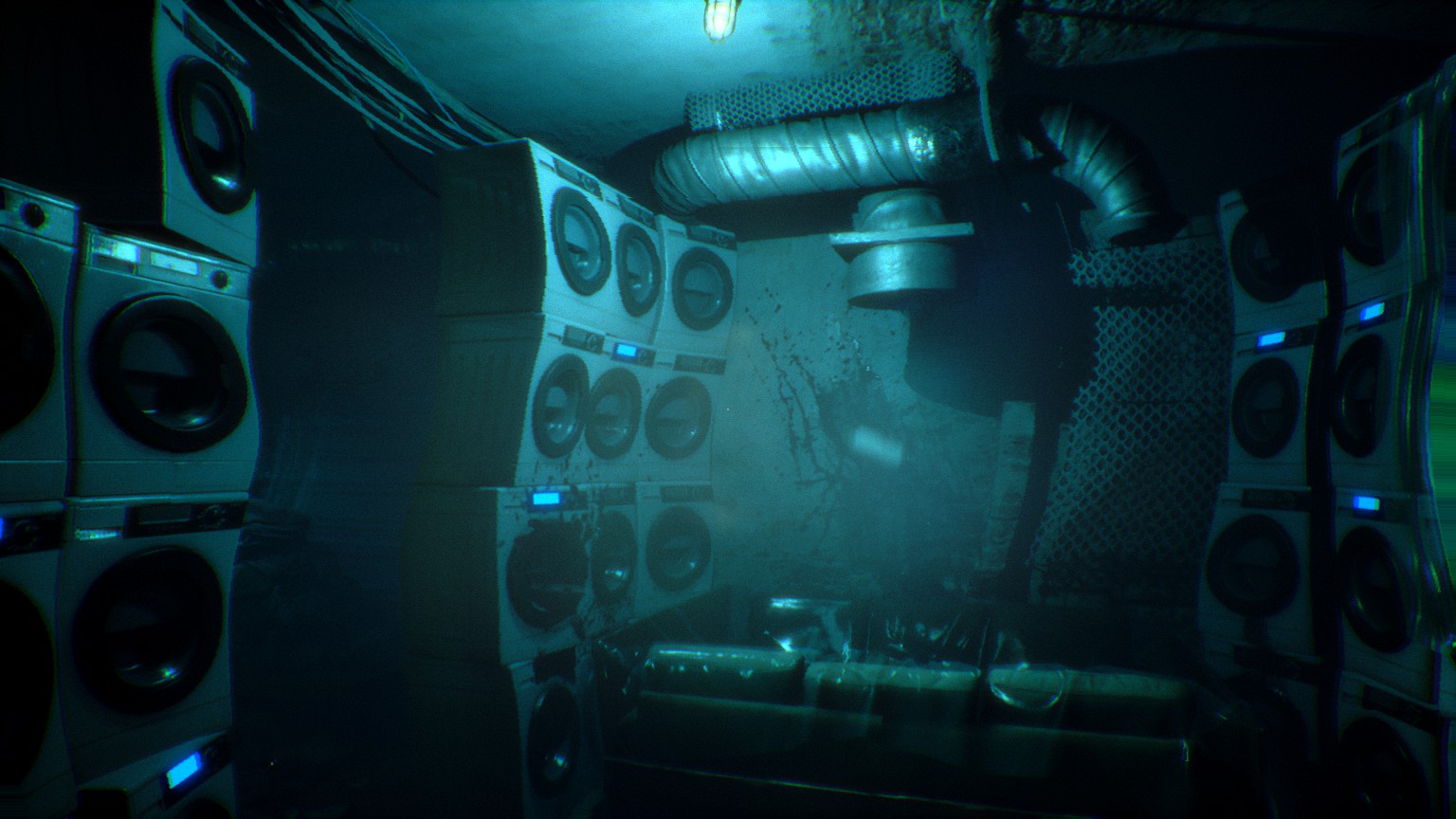
Observer is also about synchronicity—you essential take pills to stop your body rejecting your implants, which leads to dizzying effects such as smeared movement, gloss changes, and compression artefacts. In that respect's only so much 'synchronization' you can arrange, however, because the glitches are metaphors for social divisions.
There's no seamless Animus-manner blending of the stinky-tech and antiquated in Observer's capitalist dystopia; or else, flesh and machinery are forever and a day pulling apart, and pristine holograms float spookily against crumbling, unhealthful brickwork. Observer's rickety cyborg HUD alters the appearance and colour of pixels according to various visible-ended parameters, equally game decorator Pawel Niezabitowski explains. There's "the 'overdose' effect, with its blurry wobbly screen—large delay, disposable dispersal, zero people of color change". And there's "the intensely 'electronic' glitch upshot—short, sudden and drastic colour in changes". Simulating bugs like these can be beautiful hardware-intensive. "Optimization proved to equal our biggest challenge," Niezabitowski continues. Bloober eventually created a involved managing tool to equalise Sir Thomas More circumstantial post-processing personal effects against those resulting from your character's shifting psychological state. There were around dramatic setbacks. "At one point during production, combined of our designers cranked raised the 'glitchy' visual personal effects to so much a equal that even his computer couldn't direct it any more and shut down, cleanup the controller in the process," recalls Lenart, adding that "after approximately severe deliberation, we definite to allow that particular boast out".
Players, of course, English hawthorn be turned off by unreal glitches long earlier computers give way of life. "In that location's a wide spectrum of how various people react to these sorts of visuals, with some suffering from motion nausea," Lenart continues. "The effect of our HUD destabilising wasn't meant to live pleasant, as we welcome the player to feel driven to pack other dose of the synchronising medicate. Then again, we certainly didn't neediness the player to suit physically ill from the experience. Thence, a plenty of the effects we'd tested ultimately didn't arrive at it into the game." Bloober Team also stopped short of portraying the glitches as fundamental problems with the game. "Breaking the fourth surround is always alluring, especially in this musical genre," Lenart adds. "We certainly played around with some stimulating ideas. At long las, however, we focused on making the player immersed in what's happening to the protagonist."
Immersion and the quartern wall are key terms in discussion of videogame glitches. They suggest a firm boundary around the illusion—an illusion that must make up purged of reminders that you are interacting with a piece of software. This disregards what stool live achieved past taking the software's position as software as your artistic and narrative premise. Consider final yr's indie off Anodyne 2, another piece of work of time period-splicing in which you explore an overworld rendered in PS1-grade polygonal 3D, jumping into Nonproliferation Center mindworlds that recall 2D Zelda maps.
The game is full of simulated blemishes or shortcomings—among other things, you'll hear characters sneer nearly the quality of the background art—but these aren't treated strictly as disruptions. Sooner, they exist "to depict attending to there not being a hard boundary between the stake's fiction and, I guess world," notes Melos Han-Tani, indefinite half of developer Analgesic Productions. "It's not just like 'whoa, meta overgorge!' It's tied into the fiction of the game in sort of a indistinct way". The game's open-world includes 'Unzones' filled with incomplete features that aren't just 'director's cut' additions, merely a playful elaboration of the core mythology. Thither is an isometric horror segment triggered by talking to a placeholder NPC, which continues the protagonist's personal dilemmas into a different musical style.
Behind the scenes
Dismantling that 'hard bound' is important because and so very much triple-A videogame production is essentially about hiding the developer's labour from regar—strenuously shining away anything that feels artificial. Analgesic Centennial State-founder Marina Kittaka argues that this culture has trained players to be morbid nitpickers, stigmatisation developers lazy o'er the slightest discrepancy, "There has been for a long-run time a very unhealthy feedback circuit between big crippled companies and their audiences, where for capitalist reasons, companies are selling a sure fantasise of perfection and ultimate immersion."
Bugs and glitches are maker's marks—they remind you that every game is the result of soul's sweat and toil. Games that simulate errors are invitations to toy with that labor more analytically—they are a kinda irreverent fashioning-of feature, more persuasive for being woven into the game's fabric. This is an large theme of Pony Island, which invites you to break out a certain fellow feeling for the devil even as you fight for freedom. If the game within this game is an legal instrument of crucify, the bugs besides paint a portraiture of an overwhelmed lone developer, struggling to agree some QA before cargo ships.
None of which is to evoke that we should permit actual errors in our games, but information technology's worth thinking about both the puzzle out that goes into steaming out bugs, and what we lose by insisting thereon rigid barrier betwixt an immersive game and a soiled one. As Pony Island and its peers reveal, games are seldom more exciting and mysterious than when they start to break down.

Source: https://www.pcgamer.com/meet-the-developers-making-bugs-and-glitches-on-purpose/
Posted by: hiltonsteepire.blogspot.com
0 Response to "Meet the developers making bugs and glitches on purpose | PC Gamer - hiltonsteepire"
Post a Comment